Vacant lots, fence lines & tallow thickets
Lot Clearing in Galveston, TX
Overgrown lots, fence lines and Chinese tallow cleared down to workable ground — before a build, before a sale, or just to get the back half of the property back.
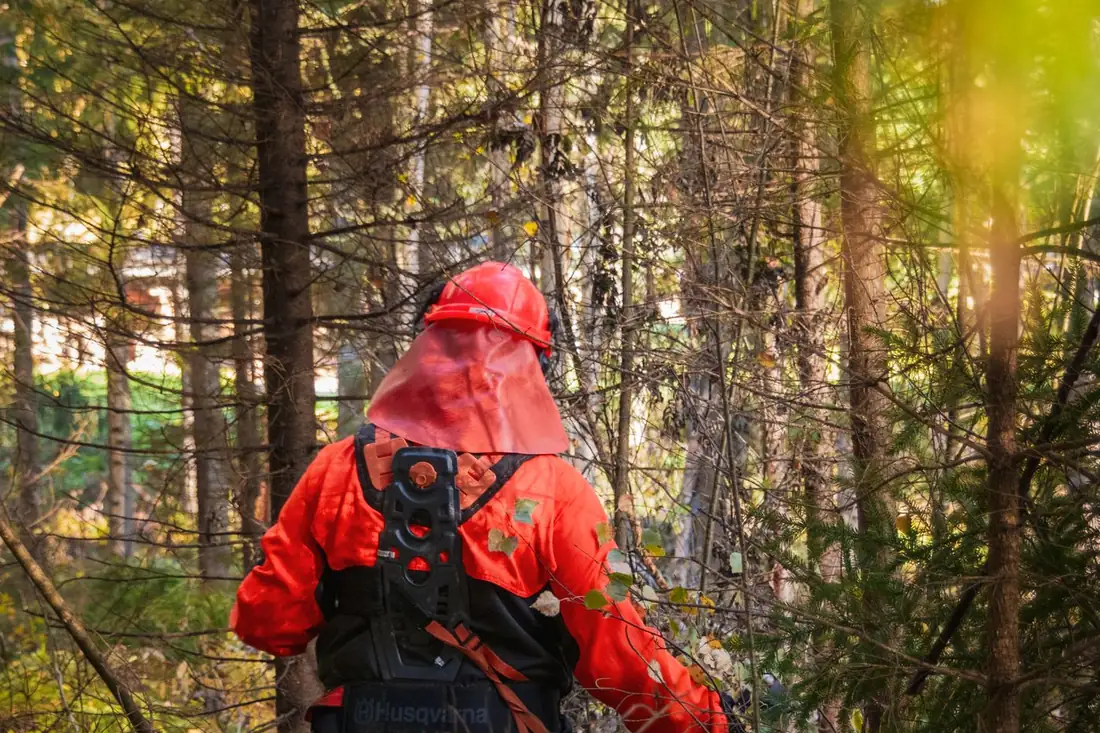
Overgrown lots, fence lines and Chinese tallow cleared down to workable ground — before a build, before a sale, or just to get the back half of the property back.
Lot clearing in Galveston, TX takes a parcel that has been growing unchecked and turns it back into ground you can use. We clear vacant lots, overgrown back halves, fence lines and drainage easements across Galveston Island and the mainland side of the county, handling brush, volunteer trees, tallow thickets and the debris that comes with them. Whether you are getting a lot ready for a build, prepping a property for sale, or finally taking back a corner that got away from you, the work ends with the lot in the condition the next step needs.
The job starts with a walk of the parcel and a decision about what stays. On an island where mature trees are scarce, that is a real conversation rather than a formality. Anything worth keeping gets flagged, along with a protection zone outside its drip line where equipment will not go.
Then the clearing itself, working in layers. Undergrowth, vines and brush come out first so the crew can see the ground and find what is actually on the lot — old fence posts, buried debris, utility markers and the occasional slab nobody mentioned. Volunteer trees and unwanted stems come next, cut low and processed on site. Larger trees are handled the same way as any removal, in sections when there is something to protect.
Debris is the part people underestimate. Brush is chipped where we can and hauled where we cannot. Stumps get ground if the plan calls for it, or left if it does not. The lot ends level enough to walk, mow or survey.
Chinese tallow is most of the answer. It is an introduced species that has taken to the Texas Gulf Coast completely: it seeds heavily, the seeds travel on water and birds, and seedlings tolerate the wet, saline conditions that slow most natives down. A vacant lot on this island can go from mowed to a young tallow stand in three or four growing seasons.
The climate does the rest. A long growing season, high humidity and regular rain mean almost nothing goes dormant for long. Add the disturbance history — storms clearing canopy and opening ground to full sun repeatedly — and you get exactly the conditions fast colonizers want.
The problem with letting it run is what tallow becomes. The wood is brittle and the form is poor, so a stand of mature tallow along a fence line or near a structure is a liability every hurricane season. Small stems are a mowing job. Ten-inch trunks are a removal job. The gap between those two states is only a few years.
Clearing a lot flat is faster and it is what most crews will quote by default. On Galveston Island it is often the wrong call. The Galveston Island Tree Conservancy has been replanting since 2008 and has put back close to 11,000 trees, and none of them are anywhere near the size of what Ike took. If there is a healthy mature live oak on your parcel, tell us before we start. Working around one adds a little time and keeps something you cannot buy back.
| Scope | Typical range | Notes |
|---|---|---|
| Single residential lot, light brush | $800 – $1,800 | Most common island job |
| Single lot, heavy growth and trees | $1,800 – $4,000 | Includes tree removal |
| Light clearing, per acre | $1,200 – $3,000 | Brush and small stems |
| Heavy clearing, per acre | $3,000 – $6,000 | Mature trees and haul-off |
| Fence line or easement, per 100 ft | $300 – $900 | Depends on density |
| Stump grinding, per stump | $150 – $400 | Optional add-on |
Density is the main driver — how much material has to be cut and moved. Then stem size, since anything over about six inches becomes tree work rather than brush work. Then disposal, which is usually the biggest surprise on a clearing invoice, because a lot that looks like nothing produces a remarkable number of truckloads. Access matters on narrow island lots where a chipper has to reach the back. And finally, whether stumps stay or go.
Full clearing takes everything down to open ground. It is the right answer when a slab is going in, when the parcel has to be surveyed or graded, or when what is growing there has no value — which on a tallow-dominated lot is often the honest assessment.
Selective thinning removes the invasive and damaged material while keeping healthy natives. It costs a little more per hour because the machine work is slower and more of it is done by hand. It also leaves a lot with shade, established root structure holding the sand, and mature trees that would take thirty years to replace. For a residential parcel you plan to live on, this is usually the better trade.
We will walk the lot with you and give you a number for both. If any of the trees coming out are large enough to need rigging, see tree removal in Galveston for how that part is handled.
Light brush and undergrowth on a typical island lot runs roughly $1,200 to $3,000 per acre. Heavier work with mature trees, tallow thickets and haul-off runs $3,000 to $6,000 per acre. Most Galveston residential lots are well under an acre, so a single-lot job often lands between $800 and $2,500. Sand makes the machine work faster than mainland clay.
Chinese tallow, without much competition. It seeds itself into vacant lots, fence lines and drainage ditches, grows several feet a year, and shades out anything native. The wood is brittle, so mature tallows break apart in storms. Clearing it while the stems are small is far cheaper than waiting until they are trees.
Yes. We clear to whatever the builder needs, whether that is brush and stems only, or full removal of stumps and root material for a slab or piling layout. Tell us what is going in and where the setbacks are, and we will leave the lot in the condition the next trade needs it in.
That is worth planning before the machines arrive. Mark anything you want kept and we will work around it, including a protection zone outside the drip line so equipment does not compact or wound the root plate. On a barrier island where mature trees are genuinely scarce, keeping one good live oak usually adds more to a property than clearing it flat.
Send us the address and we will walk it, flag what is worth keeping, and give you a number for clearing it and for thinning it.
Call (409) 255-0582 for a Free Estimate